
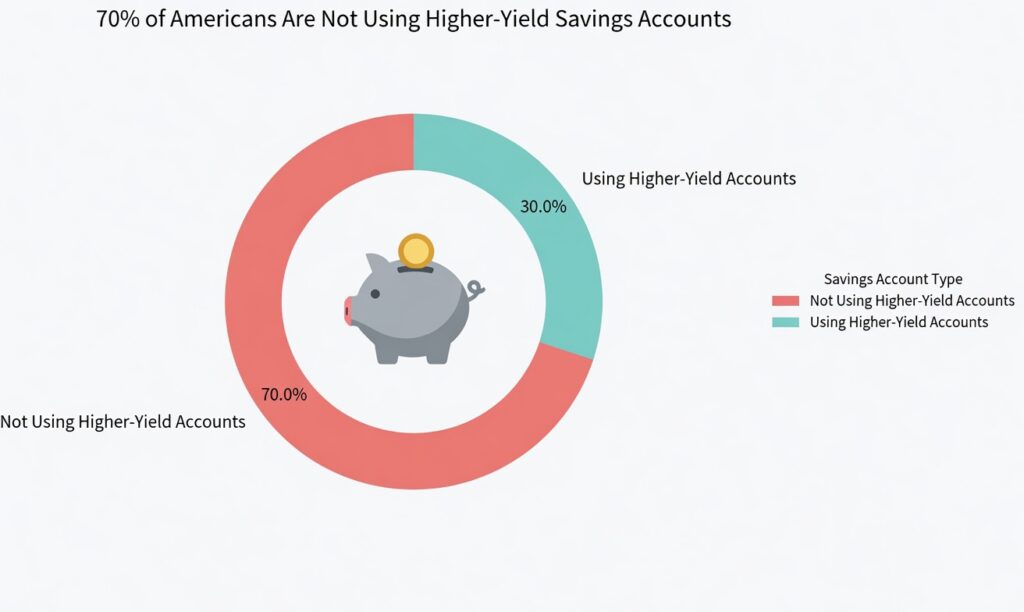

The bank is very comfortable with your money sitting there. You should be a lot less comfortable with that arrangement.
My brother Ty was recently exposed to the exact situation that you can avoid in this blog. As he and his girlfriend were getting serious and beginning to go down the path of mingling finances and investments, my brother was shocked to discover that his soon to be fiancé had all of her savings in a regular savings account at her bank. He was taken back by this and he asked her “What interest are you getting on this money?” and her response was pretty much - "Huh?"
It turns out the account was at a large bank, and the interest rate was only 0.01% - one percent of one percent, or one hundredth of a percent - Laughably low considering current interest rates. After this my brother quickly shuffled her into a higher yield account - problem solved, but this is still a big issue for so many people.
Most people have a savings account because that's what you're supposed to do, right? You open a checking account, the bank asks if you want a savings account too, and you say sure. It feels responsible. It feels safe. And honestly, for a long time it didn't matter that much because rates were so low across the board that you weren't really giving anything up. But that's not the situation anymore — and a lot of people are still sitting in a savings account earning next to nothing without really understanding what they're leaving on the table.
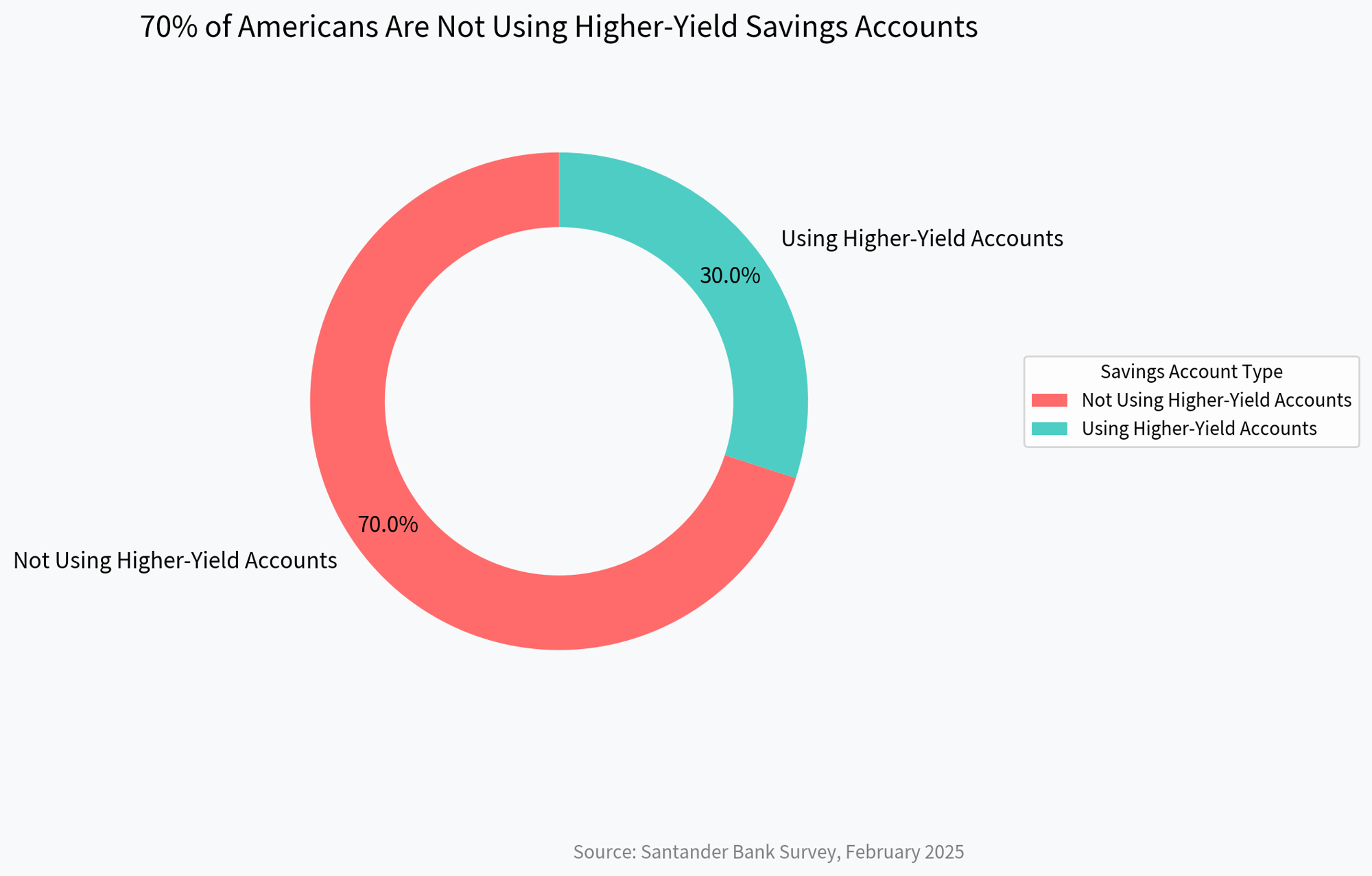
So really, the question isn't whether you should keep cash somewhere accessible. You absolutely should. Three to six months of expenses in something liquid, something stable — that's not up for debate (Not sure if you need 3 or 6 months? Check out our YouTube video on this topic). The question is where that cash lives and what it's doing for you while it sits there. The difference between a traditional savings account and a money market account right now is not a rounding error. It's real money and could potentially cost you thousands in lost revenue, and this isn’t money that requires you to work, this is basically free money.

Let's make that concrete. Say you've got $50,000 sitting in a traditional savings account at one of the big banks — which, by the way, is not an unusual number for somebody's emergency fund plus a little extra. At 0.5%, you're earning $250 a year. At 4.5%, you're earning $2,250. That's $2,000 a year in found money, just for moving it. Not investing it differently. Not taking on more risk. Just moving it to the right account. Ultimately, that's the kind of thing that makes me a little crazy when I see it, because it's so fixable and most people just don't know.
This is where people get nervous, and I get it. Money market sounds like something complicated, something risky, something that requires you to know what you're doing. But really, a money market account at an FDIC-insured institution (More on that here) is just a savings account that pays you a better rate. That's it. Your money is just as safe, just as accessible, and just as straightforward. There's no catch. The bank is paying you more because they're competing for your deposits — and the big traditional banks know that most people aren't going to bother switching, so they don't have to compete. That's where the 0.01% comes from. It's not accidental. It's a business model built on inertia. Built on the idea that the mental effort it requires for you to make the switch is high enough that you won’t ever do it.
So really, this comes back to something I think about a lot — being financially healthy isn't just about what you invest. It's about being smart with every dollar at every layer of your financial life. The cash layer matters. That's why I love helping clients with these topics, because not only is it important that you build an emergency fund, but it has to be the right size, and also it has to be in the right place.
And right now, in this rate environment, leaving money in a traditional savings account when money market rates are where they are... I just don't really buy that as a reasonable choice once you understand what you're giving up.
Move the money. Set it up, forget it, and let it work.
Thanks for reading.
FAQ
If you have any questions head to HamiltonFinancialPlanning.com to find out more and schedule a free call with our fee only CFP fiduciary advisors who specialize in building financial plans and investment management for clients nearing retirement in Austin and Houston TX.
Scott Hamilton is founder and chief financial officer at Hamilton Financial Planning, a wealth management firm that specializes in providing comprehensive financial planning for retirees. With over 20 years of experience in the financial industry, and having completed over 250 financial plans for retirees across all industries, Scott is passionate about providing his clients with the tools and insight they need to achieve their financial goals. He has a Bachelor of Business Administration in finance from Texas State University and an MBA in international finance from Pepperdine University. Scott has also been happily married to his wife, Gayle, for over 25 years. To learn more about Scott, connect with him on LinkedIn.